Palestinian Refugees: A Gendered Perspective
DOI:
https://doi.org/10.31273/eirj.v3i1.127Keywords:
Palestine, women refugees, feminism, feminist methodology, Zionism, Palestinian refugee campsAbstract
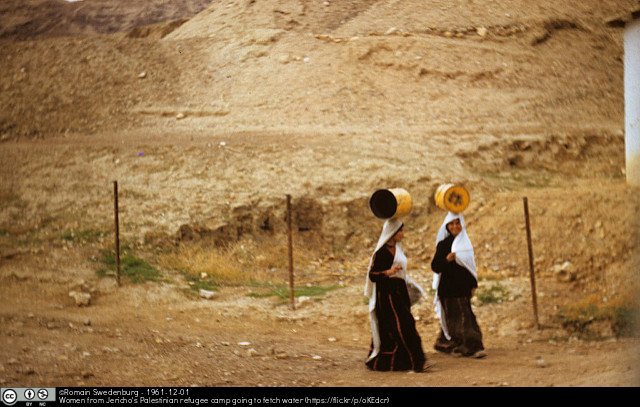
This article argues that the situation of Palestinian refugees is still relevant till this day. There are around five million refugees living in neighbouring Arab countries, such as Lebanon, Jordan, Syria and Egypt, as well as neighbouring areas in Palestine itself, like the West Bank and Gaza Strip, under very precarious conditions. Their situation is extremely unstable as any changes in the region can influence them directly.
The need to address this issue is particularly important because Palestinian refugees (as well as internally displaced Palestinians) have been both historically and politically marginalised. In particular, I will argue for a need to gender the debate around the Palestinian refugees, because the distinct experience of women Palestinian refugees has been overlooked within this context. Most literature has focused on the Palestinian refugees as a holistic population, which assumes all refugees share the same struggle. However, understanding the position of women within the context of the refugees and the unique struggles they face is essential to understanding their particular experiences as refugees and in highlighting their differential needs; this is why a feminist perspective is needed within the field of refugee studies.
This article is based on a feminist journey drawing on research interviews with female Palestinian refugees in camps in Jordan, and with Syrian Palestinian women in Turkey, Jordan and Europe.
Downloads
References
Abdo, N. (1990), ‘Nationalism and Feminism: Palestinian Women and the Intifada’, in Moghadam, V.M. (ed.) Gender and National Identity: Women and Politics in Muslim Societies, London: Zed Books, 148–170
Abu-Assab, N. (2012), ‘Narratives of Ethnicity and Nationalism: A Case Study of Circassians in Jordan’, unpublished PhD thesis, University of Warwick, UK
Akram, S. M. (2002), ‘Palestinian Refugees and Their Legal Status: Rights, Politics, and Implications for a Just Solution’, Journal of Palestine Studies, 31, 36–51
Amawi, A. (2000), ‘Gender and Citizenship in Jordan’, in Joseph, S. (ed.) Gender and Citizenship in the Middle East, New York: Syracuse University Press
Abu Murad, T. A. (2004), ‘Palestinian Refugee Conditions Associated with Intestinal Parasites and Diarrhoea: Nuseirat Refugee Camp as a Case Study’, Public Health, 118, 131–42
Ehrlich, A. (2004), ‘On the Right of Return, Demography and Ethnic-Cleansing in the Present Phase of the Israeli-Palestinian Conflict’, Orient - Deutsche Zeitschrift fur Politik und Wirtschaft des Orients, 45, 549–563
El Abed, O. (2009), Unprotected: Palestinians in Egypt since 1948, Canada: IDRC
El Abed, O. (2006), ‘Immobile Palestinians: ongoing plight of Gazans in Jordan’, Forced Migration Review 26, 17–18
El Abed, O. (2004), ‘The forgotten Palestinians: how Palestinian refugees survive in Egypt’, Forced migration review, 20, 29–31
El Sayed- Ali, S. (2006), ‘Palestinian Refugees in Lebanon’, Forced Migration Review, 26, 13–14
El-Solh, C. F. (2003), ‘Gender, Poverty and Employment in the Arab Region’, Geneva, Capacity-Building Program on Gender Poverty and Employment & National Policy Group
Enloe, C. (1989), Bananas, Beaches and Bases: Making Feminist Sense of International Politics, London: Pandora Press
Joseph, S. (1993), ‘Gender and Relationality Among Arab Families in Lebanon’, Feminist Studies, 19, 465–86
Joseph, S. (1996), ‘Patriarchy and Development in the Arab World’, Gender and Development, 4, 14–19
Hanafi, S. (2011) ‘Governing the Palestinian Refugee Camps in Lebanon and Syria: The Case of Nahr el-Bared and Yarmuk Camps’, in Knudsen, A. & Hanafi, S. (eds) Palestinian Refugees: Identity, Space and Place in the Levant, USA: Routledge, 14–29
Kandiyoti, D. (1988), ‘Bargaining with Patriarchy’, Gender and Society, 2, 274–90
Khalidi, W. ed. (1992), All That Remains: The Palestinian Villages Occupied and Depopulated by Israel in 1948, Washington, D.C.: Institute for Palestine Studies
Khalidi, W. (2005) ‘Why Did the Palestinians Leave, Revisited’, Journal of Palestine Studies, 34, 42–54
Khawaja, M. (2003), ‘Migration and the Reproduction of Poverty: The Refugee Camps in Jordan’, International Migration, 41, 27–57
Klein, R. D. (1983), ‘How to do what we want to do: Thoughts about feminist methodology’, in Bowles, G. & Klein, R. D. (eds.) Theories of Women's Studies, London: Routledge and Kegan Paul
Masalha, N. (1992), Expulsion of the Palestinians: The Concept of “Transfer” in Zionist Political Thought, 1882–1948, Washington, D.C.: Institute for Palestine Studies
Massad, J. A. (2001), Colonial Effects: The Making of National Identity in Jordan, New York: Columbia University Press
Moghadam, V. M. (1993), Modernising Women: Gender and Social Change in the Middle East, Colorado: Lynne Rienner
Reinharz, S. (1992), Feminist Methods in Social Research, Oxford: Oxford University Press
Reinharz, S. (1997), ‘Who Am I? The Need for a Variety of Selves in the Field’, in Hertz, R. (ed.) Reflexivity and Voice, London: Sage Publications
Roseneil, S. (1993) ‘Greenham Revisited: Researching Myself and my Sisters’, in Hobbs, D. & May, T. (eds.) Interpreting the Field: Accounts of Ethnography, Oxford: Oxford University Press
Q & A: ‘What you need to know about Palestinian Refugees and Internally Displaced Persons, 2015’. Badil: Resource Centre for Palestinian Residency and Refugee Rights: http://www.badil.org/en/press-releases/149-2015/4451-pren19051515 [accessed 16/06/2015]
Said, E. (2001), ‘Introduction: The Right of Return at Last’, in N. Aruri (ed.), Palestinian Refugees: The Right of Return, Pluto Press, London, 1–35
Shalhoub-Kevorkian, N. (2010), ‘Palestinian Women and the Politics of Invisibility: Towards a Feminist Methodology’, Peace Prints: South Asian Journal of Peace building, 3(1): http://mada-research.org/en/2013/07/28/palestinian-women-and-the-politics-of-invisibility-towards-a-feminist-methodology-nadera-shalhoub-kevorkian-2/ [accessed 30/10/2015]
Shiblak, A. (1996), ‘Residency status and civil rights of Palestinian refugees in Arab countries’, Journal of Palestine Studies, 25(3), 36–45
Shiblak, A. (2006), ‘Stateless Palestinians’, Forced Migration Review, 26, 8–9: http://www.fmreview.org/FMRpdfs/FMR26/FMR2603.pdf [accessed 30/10/2015]
Stanley, L. & Wise, S. (1990), ‘Method, Methodology and Epistemology in Feminist Research Processes’, in Stanley, L. (ed.) Feminist Praxis: Research, Theory and Epistemology in Feminist Sociology, London: Routledge
Stanley, L. & Wise, S. (1993) Breaking Out Again: Feminist Ontology and Epistemology London, London: Routledge
Zureik, E. (2002), ‘The Palestinian Refugee Problem: Conflicting Interpretations’, Global Dialogue, 4(3): http://www.worlddialogue.org/content.php?id=237 [accessed 30/10/2015]
Published
Issue
Section
License
Authors who publish with this journal agree to the following terms:
Authors retain copyright and grant the journal right of first publication with the work simultaneously licensed under a Creative Commons Attribution License (CC-BY), which permits use and redistribution of the work provided that the original author and source are credited, a link to the license is included, and an indication of changes which were made. Third-party users may not apply legal terms or technological measures to the published article which legally restrict others from doing anything the license permits.
If accepted for publication authors’ work will be made open access and distributed under a Creative Commons Attribution (CC-BY) license unless previously agreed with Exchanges’ Editor-in-Chief prior to submission.
Authors are able to enter into separate, additional contractual arrangements for the non-exclusive distribution of the journal's published version of the work (e.g., post it to an institutional repository or publish it in a book), with an acknowledgement of its initial publication in this journal.
Authors are permitted and encouraged to post their work online (e.g., in institutional repositories or on their website) prior to and during the submission process, as it can lead to productive exchanges, as well as earlier and greater citation of published work. (see: The Effect of Open Access)