Brasiguaio Identities
An outcome of the pursuit of land across the Brazilian and Paraguayan shared border region
DOI:
https://doi.org/10.31273/eirj.v5i1.205Keywords:
migration, borders, transnationalism, Brazil, Paraguay, Brasiguaios, migración, fronteras, transnacionalismo, BrasiguayosAbstract
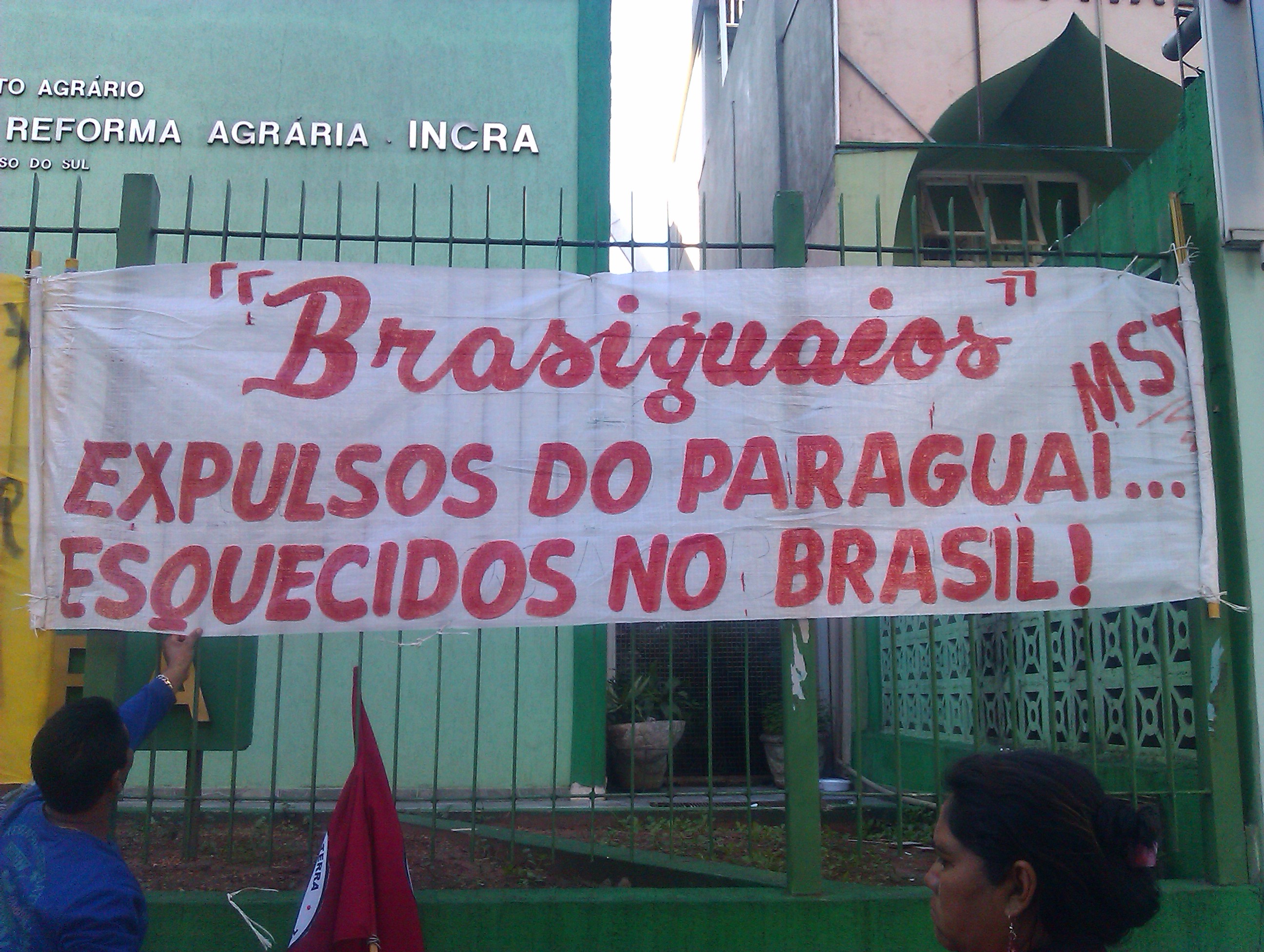
The movement of people between places is far from being a new or isolated phenomenon and is happening more often than before. This is also the case for individuals who moved from Brazil and Paraguay. Based on the existing literature as well as on data gathered in the landless camp Antônio Irmão, also known locally as the ‘Brasiguaios landless camp’ in Itaquiraí in the state of Mato Grosso do Sul, Brazil, this article explains how their search for a piece of land in either Brazil and Paraguay influenced the formation of the Brasiguaios identities. First, I briefly approach the foundation of transnationalism scholarship, which guided my research. Next, I demonstrate how land policies in Brazil and Paraguay, aimed at developing their respective border regions, played a role in the migration of Brazilians to Paraguayan and then the return of a number of them to Brazil. Last, I share the narrative of individuals in the Brasiguaio landless camp in the pursuit of land in either country. At the core of my argument is that the Brasiguaio identities of this landless group result from their pursuit of land rather than from migration processes.
Resumen en Español
El movimiento de personas entre lugares está lejos de ser un fenómeno nuevo o aislado y está ocurriendo con más frecuencia que antes. Este también es el caso de las personas que se mudaron de Brasil a Paraguay. Basando-se en la literatura existente, así como datos recopilados en el campamento de los sin tierra Antônio Irmão, también conocido localmente como el “campamento de los Brasiguaios” en Itaquiraí en el estado de Mato Grosso do Sul, Brasil, este artículo explica cómo su búsqueda por un pedazo de tierra en Brasil o Paraguay influyó en la formación de sus identidades Brasiguaias. Primero, abordo brevemente al campo de estudios del transnacionalismo, que ha guiado mi investigación. Después, demuestro cómo las políticas agrarias en Brasil y Paraguay, buscando desarrollar sus respectivas regiones fronterizas, desempeñaron un papel en la migración de los brasileños a Paraguay y en el regreso de muchos de ellos a Brasil. Finalmente, comparto la narrativa de individuos en el campamento de los Brasiguaios que han buscado un pedazo de tierras en uno de los países. Mi argumento central es que las identidades Brasiguaias de los miembros de este grupo resultan de su búsqueda por un pedazo de tierra y no meramente por los procesos migratorios.
Downloads
References
Albuquerque, J. (2009), A Dinâmica das Fronteiras: Deslocamento e Circulação dos “Brasiguaios” entre os Limites Nacionais. Horizontes Antropológicos 31, 137-166
Albuquerque, J. L. (2010), A Dinâmica das Fronteiras: Os brasiguaios na Fronteira entre o Brasil e o Paraguai. 1st ed. São Paulo: Annablume.
Ausier, J. (2008), Identidade e Conflito na Fronteira Brasil-Paraguai: O Caso dos Brasiguaios. Revista Eletrônica Boletim do TEMPO 2 (34)
Blanc, J. (2015), Enclaves of Inequality: Brasiguaios and the Transformation of the Brazil-Paraguay Borderlands. The Journal of Peasant Studies 42 (1), 145-158
Brasil (1988). Constituição da República Federativa do Brasil. Brasilia: Available at: http://www.planalto.gov.br/ccivil_03/constituicao/constituicao.html, accessed 22 June 2017
Colognese, S. A. (2012), Brasiguaios: uma Identidade na Fronteira Brasil/Paraguai. Tempo da Ciência 19 (38), 145-158
Cortêz, C. (1993), Brasiguaios: Os Refugiados Desconhecidos. Campo Grande -MS, Brazil: Agora
Dietrich, W. (2004), ‘Os Brasiguaios no Brasil Aspectos Fonéticos e Gramaticais’, in: Dietrich, W. and Noll, V. (eds.) O Português e o Tupi no Brasil: Frankfurt, pp.147-154
Estrada, M. (2015), The Impact of Land Policies on International Migration and Transnational Practices: The Case of the Brasiguaios. Working Paper Series, p.17. International Migration Institute [Online]. Available at: http://www.imi.ox.ac.uk/publications/the-impact-of-land-policies-on-international-migration-the-case-of-the-brasiguaios, accessed 22 July 2017
Fernandez-Kelly, P. (2015), ‘Assimilation through Transnationalism: A theoretical Synthesis’ in: Portes, A. and Fernandez-Kelly, P. (eds.) The state and the grassroots: Immigrant transnational organizations in four continents. New York - Oxford: Berghahn Books, pp. 291-318
Ferrari, C. A. (2009), Dinâmica Territorial na (s) Fronteira (s): Um Estudo sobre a Expansão do Agronegócio e a Exploração dos Brasiguaios no Norte do Departamento de Alto Paraná-Paraguai. Dissertação de Mestrado. Universidade Federal da Grande Dourados (UFGD)
Fitzgerald, D. and Waldinger, R. (2004), Transnationalism in Question. American Journal of Sociology 109 (5), pp.1177-1195
Fogel, R. and Riquelme, M. (2005), Enclave Sojero: Merma de Soberanía y Pobreza. Asunción: CERI
Glick Schiller, N., Basch, L. and Blanc, C. S. (1994), Nations Unbound: Transnational Projects, Postcolonial Predicaments, and Deterritorialized Nation-States. Amsterdam: Gordon and Breach Publishers
Hannerz, U. (1996), Transnational Connections: Culture, People, Places. London and New York: Routledge
Kopinak, K. and Soriano Miras, R. M. (2013), Types of Migration Enabled by Maquiladoras in Baja California, Mexico: The Importance of Commuting. Journal of Borderlands Studies 28 (1), pp. 75-91
Malkki, L. (1992), ‘National Geographic: The Rooting of Peoples and the Territorialization of National Identity among Scholars and Refugees’ in: Eley, G. and Suny, R. G. (eds.) Becoming National: A Reader. New York: Oxford University, pp. 24-44
Marques, D. H. F. (2009), Circularidade na Fronteira do Paraguai e Brasil: O Estudo de Caso dos “Brasiguaios”. Ph.D. in Demography. UFMG/Cedeplar
Massey, D. (2005), For Space. Oak, CA: Sage.
Mongelós, L. E. V. (2006), JST Portavoz de la Violencia Sufrida por los Brasiguayos un Fenómeno Social Ignorado por Dos Países: Análisis del periodo 1985-1986. Carrera de Ciencias de la Comunicación. Universidad Católica Nuestra Señora de la Asunción
Moraes, I. A. d. and Costa Vieira, F. A. d. (2015), Capitalismo Agrário e os Movimentos Campesinos no Paraguai. Revista Estudos Históricos 28 (56), pp. 363-384
Nickson, R. A. (1988), Tyranny and longevity: Stroessner's Paraguay. Third World Quarterly 10 (1), pp. 237-259
Nogueira, V. M. R. and Silva, M. G. (2008), ‘Brasiguaios: A Dupla Desigualdade na Região da Fronteira’, in: Costa, L. C. (ed.) Estado e Democracia: Pluralidade de Questões. São Paulo/Ponta Grossa: UEPG, pp. 153-170
Palau, T. and Heikel, M. V. (1987), Los Campesinos: El Estado u las Empresas em la Frontera Agrícola. Asunción: BASE/PISPAL.
Palhares, I. (2011), O modo como se pensa a divisão da terra. ComCiência, http://comciencia.scielo.br/scielo.php?script=sci_arttext&pid=S1519-76542011000900006&lng=es&nrm=iso, accessed 22 July 2017.
Paraguay (1963a), Ley 852/63 - Instituto de Bienestar Rural. In: Gobierno del Paraguay, ed. Asunción, Paraguay
Paraguay (1963b), Ley 854/63 - Estatuto Agrario. In: Gobierno del Paraguay, ed. Asunción, Paraguay
Portes, A. (2001), Introduction: The Debates and Significance of Immigrant Transnationalism. Global Networks 1 (3), pp. 181-194
Pratt, G. and Yeoh, B. (2003), Transnational (counter) Topographies. Gender, place and culture: A journal of Feminist Geography 10 (2), pp. 159-166
Resende, G. (2011), Novo Horizonte do Sul Revive sua Origem da Reforma Agrária. Novo Horizonte do Sul -MS Available at: http://www.geraldoresende.com.br/imprensa/noticias/novo-horizonte-do-sul-revive-sua-origem-da-reforma-agraria, accessed 20 June 2017.
Rocha, J. (1985), Brazilian Farmers Flee Paraguayan Victimisation. The Guardian, p. 4
Smith, M. P. (1994), Can You Imagine? Transnational Migration and the Globalization of Grassroots Politics. Social Text (39), pp. 15-33
Sprandel, M. A. (1992), Brasiguaios: Conflito e Identidade em Fronteiras Internacionais. Master. Universidade Federal do Rio de Janeiro
Strüver, A. (2005), Spheres of Transnationalism within the European Union: On Open Doors, Thresholds and Drawbridges along the Dutch–German Border. Journal of Ethnic and Migration Studies 31 (2), pp. 323-343
Tiburcio, J. (2011), 'Brazilians in Paraguay: A Growing Internal Problem or a Regional Issue?’ in: Kemp, W., Popovski, V. and Thakur, R. (eds.) Blood and Borders: The Responsibility to Protect and the Problem of the Kin-State. Tokyo -New York- Paris: United Nations Press.
UNFPA (2017), United Nations Population Fund. Available at: http://www.unfpa.org/migration, accessed 20 June 2017
Valemsnews (2017), Escolas realizam desfile cívico em comemoração ao 32º Aniversário de Assentamento de Novo Horizonte do Sul. Novo Horizonte do Sul: ValemsNews. Available at: http://www.valemsnews.com.br/noticias/item/1189-escolas-realizam-desfile-civico-em-comemoracao-ao-32-aniversario-de-assentamento-de-novo-horizonte-do-sul, accessed 21 June 2017
Vuyk, C. (2013), Subimperialismo Brasileiro y Dependencia Paraguaya: Análisis de la Situación Actual
Wagner, C. (1990), Brasiguaios: Homens sem Pátria. Petrópolis-RJ, Brazil: Voz
Downloads
Published
Issue
Section
License
Copyright (c) 2017 Marcos Estrada

This work is licensed under a Creative Commons Attribution 4.0 International License.
Authors who publish with this journal agree to the following terms:
Authors retain copyright and grant the journal right of first publication with the work simultaneously licensed under a Creative Commons Attribution License (CC-BY), which permits use and redistribution of the work provided that the original author and source are credited, a link to the license is included, and an indication of changes which were made. Third-party users may not apply legal terms or technological measures to the published article which legally restrict others from doing anything the license permits.
If accepted for publication authors’ work will be made open access and distributed under a Creative Commons Attribution (CC-BY) license unless previously agreed with Exchanges’ Editor-in-Chief prior to submission.
Authors are able to enter into separate, additional contractual arrangements for the non-exclusive distribution of the journal's published version of the work (e.g., post it to an institutional repository or publish it in a book), with an acknowledgement of its initial publication in this journal.
Authors are permitted and encouraged to post their work online (e.g., in institutional repositories or on their website) prior to and during the submission process, as it can lead to productive exchanges, as well as earlier and greater citation of published work. (see: The Effect of Open Access)